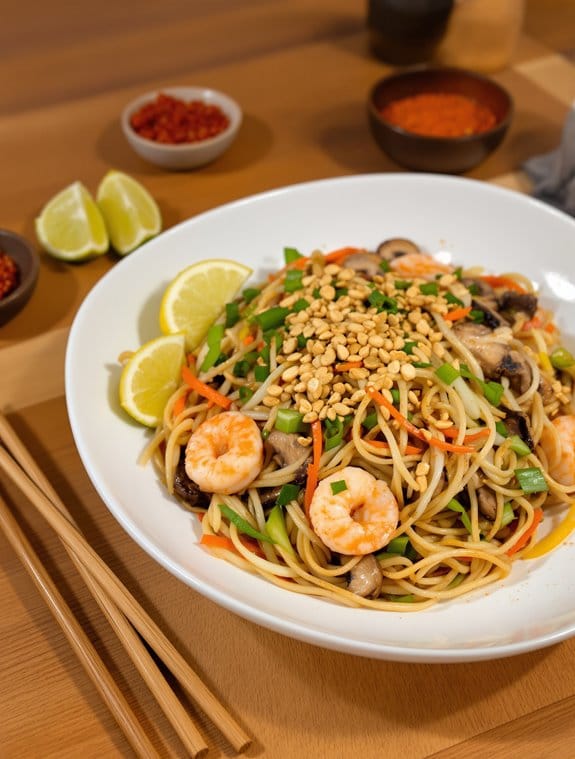
Imagine a bustling street food stall in Thailand, the air thick with aromatic spices, the sizzle of woks, and the tantalizing scent of freshly made Pad Thai. It's a culinary dream for many, and for good reason! This iconic Thai noodle stir-fry has captured hearts globally, becoming a benchmark for judging the quality of any Thai restaurant. But what if we told you that achieving that authentic, restaurant-quality flavor, complete with slippery noodles, the perfect sweet-savoury-sour balance, and a sprinkle of crunchy peanuts, is not only possible but surprisingly easy to replicate in your own kitchen? Welcome to the world of Minute Pad Thai – bold flavors brought to life with ingredients found in your everyday supermarket.
For too long, home cooks have faced a dilemma: either settling for overly simplified, Westernized versions that lack true depth, or embarking on an exotic ingredient hunt that deters many. This article bridges that gap, offering insights and tips to create a truly memorable Pad Thai that stacks up to your favorite takeout, all within a reasonable timeframe and without needing a passport to find ingredients. Get ready to transform your understanding of homemade Thai cuisine!
The Quest for Perfect Pad Thai: Balancing Authenticity and Accessibility
The journey to the ideal homemade Pad Thai often feels like navigating a culinary spectrum. On one end, you have the hardcore authentic street food versions, rich with a distinct "fishy/prawny funk" derived from specific, sometimes obscure, ingredients and traditional preparation methods. While incredibly addictive and true to its origins, this intensity can be overwhelming for some palates, and the ingredients might require a trip to a specialized Asian market.
On the opposite end, a quick online search reveals countless "easy" or "basic" Westernized recipes. These often rely heavily on just soy sauce, sugar, and a touch of vinegar or lime, falling short of the complex, layered flavors that make Pad Thai so beloved. The result? A dish that might be edible but ultimately lacks the proper depth, often tasting too sweet and failing to evoke the authentic Thai experience found in good restaurants.
Our mission is to guide you to that sweet spot in the middle: a Pad Thai recipe that delivers the robust, nuanced flavors of your favorite Thai restaurant without demanding an ingredient scavenger hunt or hours of preparation. This approach focuses on capturing the essence of great Thai takeout – less oily, yet packed with the vibrant taste profile – by making smart ingredient choices that are readily available at your local grocery store. It's about empowering every home cook to achieve culinary success, proving that bold flavors are within reach for your next weeknight meal.
Unlocking the Soul of Pad Thai: The Essential Sauce Ingredients
The true magic of any great Pad Thai lies in its sauce. It's the harmonious blend of sweet, savoury, and sour notes that tantalizes the taste buds and defines this iconic dish. Without a well-balanced sauce, your Pad Thai will inevitably fall flat. Fortunately, creating this liquid gold is far less intimidating than it sounds, especially when you know which key ingredients to focus on.
The core components of an exceptional Pad Thai sauce include:
- Fish Sauce: Provides the essential umami and savoury depth, a cornerstone of Thai cuisine.
- Oyster Sauce: Adds a beautiful glossy texture, a hint of sweetness, and another layer of savoury complexity.
- Brown Sugar: Contributes the necessary sweetness, balancing out the other potent flavors.
- Tamarind: This is arguably the heart and soul of the sauce, delivering that distinctive sour tang that defines authentic Pad Thai.
The Mighty Tamarind: Your Secret Weapon for Authentic Flavor
Tamarind is the ingredient most often misunderstood or overlooked in home cooking, yet it's absolutely crucial for that signature sour flavor profile. In traditional Thai cooking, cooks often start with tamarind pulp, a block resembling a bar of soap. This pulp is soaked in hot water, then pressed through a sieve to extract a rich, tangy puree. While this method yields incredible results, it's also time-consuming.
For the sake of convenience and accessibility, ready-made tamarind puree (sometimes labeled tamarind concentrate or paste) is a fantastic substitute. You can find it in the Asian aisle of most well-stocked supermarkets, and certainly in any Asian grocery store where it's often more economical. When selecting, opt for brands with minimal added ingredients to ensure the purest flavor. A little goes a long way, so start with the recommended amount and adjust to your taste.
A Game-Changing Substitute: Ketchup!
Believe it or not, if tamarind puree proves elusive, common kitchen ketchup can be a surprisingly effective substitute. With a few minor tweaks to the overall sauce recipe, ketchup's inherent sweet and sour profile can mimic the essence of tamarind remarkably well, leading to an extremely good outcome that will still impress. This demonstrates how versatile and adaptable Pad Thai can be, allowing you to Unlock True Pad Thai Flavor: Bridging Authentic & Easy Home Cooking without compromise.
Building Your Bowl: Core Components and Customization
Once you've mastered the sauce, the rest of your Pad Thai comes together with familiar ingredients and easy techniques. The beauty of this dish lies in its versatility, allowing you to customize it to your preference while maintaining its core identity.
The Noodles: The Foundation of Your Pad Thai
The star of any noodle stir-fry is, of course, the noodles! For Pad Thai, you'll need thin, flat dried rice noodles. These are widely available in the international or Asian food aisle of most supermarkets. While various brands exist, some home cooks find "Thai style" rice noodles (like those from Chang's, mentioned in our reference) to be easier to work with than some other traditional Thai brands, which can sometimes be more delicate and prone to breaking. The key is proper rehydration: never over-soak them! You want them pliable, not mushy, as they will continue to cook in the wok.
Protein Powerhouses: Your Choice, Your Style
Pad Thai offers delicious flexibility when it comes to protein. The most popular choices are:
- Chicken: Thinly sliced chicken breast or thigh cooks quickly and absorbs the sauce beautifully.
- Prawns/Shrimp: Adds a lovely seafood sweetness and cooks in a flash, perfect for a minute Pad Thai.
- Firm Tofu: A fantastic vegetarian option, providing texture and absorbing flavors like a sponge.
Feel free to choose your favorite, or even combine two, such as chicken and shrimp, for a truly varied experience.
Vibrant Veggies and Essential Aromatics
Beyond the protein, a few key vegetables and aromatics elevate the texture and flavor profile:
- Bean Sprouts: Added at the very end, they provide a delightful crunch and freshness.
- Garlic Chives: These add a subtle oniony-garlicky punch. If unavailable, thinly sliced spring onions (scallions) are an excellent substitute.
- Scrambled Egg: Incorporated into the stir-fry, it adds richness and another layer of texture.
While sticking to these classics ensures an authentic taste, you can also sneak in thinly sliced carrots or bell peppers for extra color and nutrients, though always remember not to overcrowd your pan.
The Finishing Touches: Garnish for Grandeur
No Pad Thai is complete without its essential garnishes:
- Crushed Roasted Peanuts: These provide a crucial textural contrast and nutty flavor.
- Fresh Lime Wedges: A squeeze of fresh lime juice at the table brightens the dish and enhances its sour notes.
These simple additions are not mere decorations; they are integral to the full Pad Thai experience.
Mastering the Stir-Fry Technique for "Minute Pad Thai"
The "Minute" in Minute Pad Thai isn't just a catchy phrase; it speaks to the speed and efficiency of the stir-frying process. The secret to achieving this rapid cooking, alongside the bold flavors, lies in meticulous preparation and a few key techniques. To truly Master Restaurant-Quality Pad Thai at Home with Ease, mise en place—having all your ingredients prepped, measured, and ready before you even turn on the stove—is paramount.
The Golden Rules of Stir-Frying:
- High Heat is Your Friend: Use a large wok or a heavy-bottomed skillet over high heat. This ensures that ingredients sear quickly rather than steam, locking in flavors and creating that characteristic smoky aroma (wok hei).
- Don't Overcrowd the Pan: Cook in batches if necessary, especially if you're using a smaller pan. Overcrowding lowers the pan's temperature, leading to soggy, unappealing results.
- Sequence Matters: Start with ingredients that take longer to cook (like chicken), then add those that cook quickly (shrimp, egg), followed by aromatics, noodles, and finally, the sauce and delicate vegetables.
- Less Oil, More Flavor: Unlike many restaurants that use an abundance of oil, cooking at home allows you to control the fat content without sacrificing flavor. A tablespoon or two is often sufficient.
- Taste and Adjust: The beauty of home cooking is the ability to fine-tune. Once everything is combined, taste a strand of noodles. Does it need more sourness (lime, tamarind), sweetness (sugar), or umami (fish sauce)? Adjust accordingly.
Start by quickly searing your chosen protein, setting it aside, then scrambling the egg. Reintroduce the protein, add the soaked noodles, pour in your perfectly mixed sauce, and toss vigorously. Finally, fold in your bean sprouts and garlic chives (or spring onions) just before serving to maintain their crispness. The entire cooking process, once ingredients are prepped, should take mere minutes.
Preparing Pad Thai at home is not just about making a meal; it's about embarking on a flavorful adventure. It's the joy of watching disparate ingredients come together in a symphony of tastes and textures, all under your watchful eye. By focusing on quality ingredients, understanding the sauce's core, and mastering a few simple techniques, you'll be dishing out bowls of incredible Pad Thai that rival any restaurant, proving that bold, authentic Thai flavors are truly achievable from your own kitchen.
